Google’s AI Future Is Finally Here: Gemini, AI Search & Glasses
Google’s AI Future Is Finally Here: Gemini, AI Search & Glasses
For more than two decades, Google has defined how humans interact with information. From the original search bar to Android smartphones, Gmail, Maps, and YouTube, the company quietly became the digital layer of modern life. But in 2025 and beyond, Google is no longer just a search company. It is transforming into an AI-first ecosystem, and this shift may become the biggest technological change since the smartphone revolution.
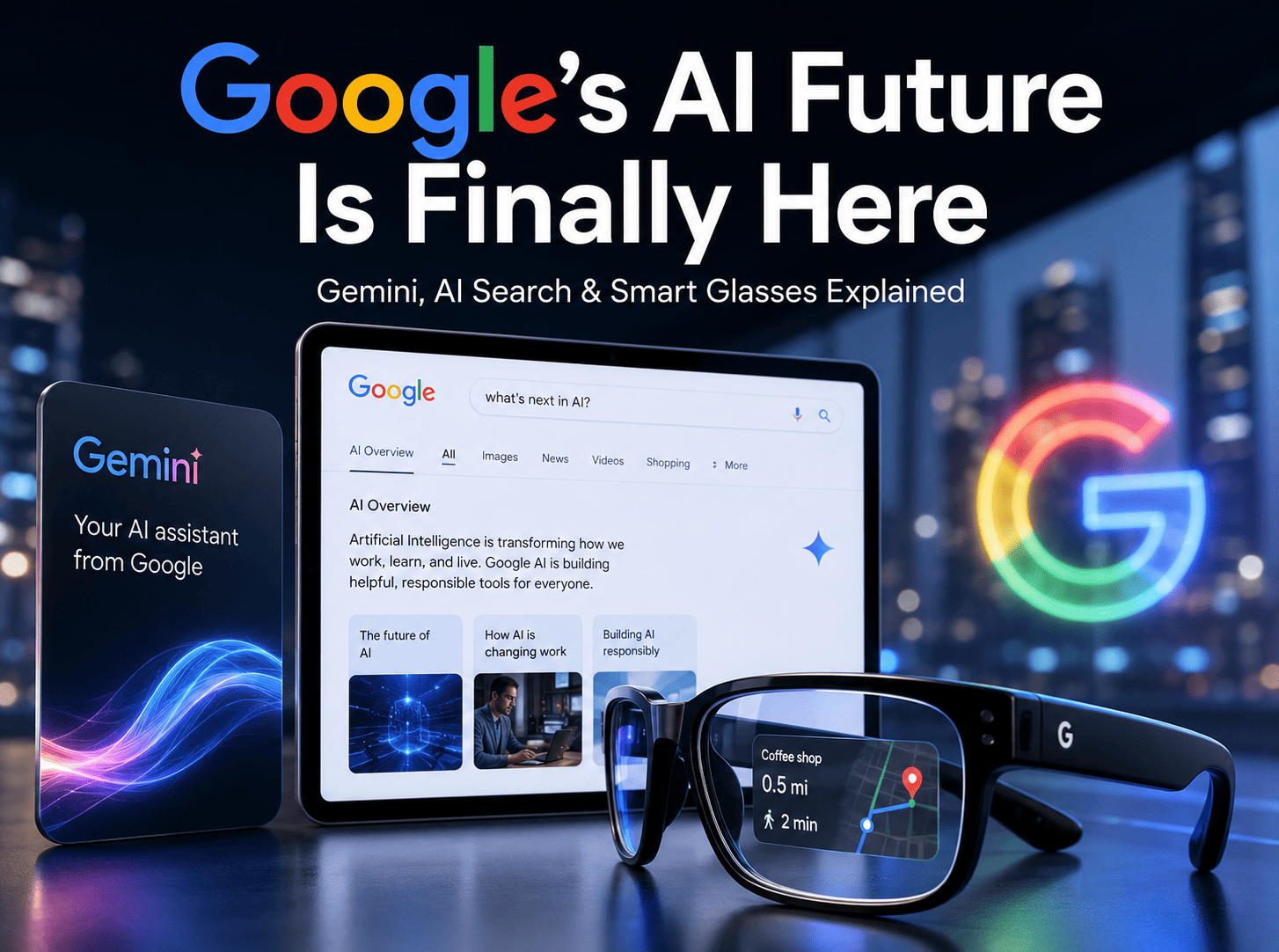
At recent Google I/O events, Google unveiled a wave of groundbreaking artificial intelligence innovations, including Gemini Flash, Gemini Omni, AI-powered Search experiences, Project Astra, Android XR smart glasses, and AI systems designed specifically for scientific discovery. Together, these announcements signal one clear message: Google’s AI future is finally here.
This is not simply another software update. Google is rebuilding the internet around AI.
The Beginning of Google’s AI Era
For years, Google experimented with machine learning behind the scenes. Features like autocomplete, Google Translate, smart replies in Gmail, and recommendation systems on YouTube were early signs of AI integration. However, the launch of generative AI tools like ChatGPT accelerated the competition and forced Google to rethink its entire strategy.
The answer was Gemini.
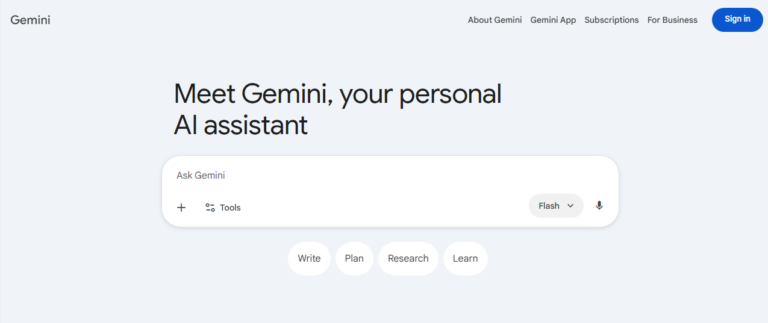
Gemini is Google’s next-generation AI model family developed by DeepMind. Unlike older AI systems that specialized in text only, Gemini was built as a multimodal AI platform capable of understanding text, images, video, audio, code, and live interactions simultaneously.
Google now sees Gemini as the future operating layer across every product it owns from Search and Workspace to Android, YouTube, and wearable devices.
Gemini Flash: Speed Meets Intelligence
One of the most important announcements from Google I/O was Gemini Flash. Traditionally, powerful AI models required enormous computing power and often responded slowly. Google designed Gemini Flash to solve this problem.
Gemini Flash focuses on speed, responsiveness, and real-time interaction without sacrificing advanced reasoning capabilities. According to Google, it is optimized for agentic workflows, coding tasks, multimodal processing, and dynamic conversations.
This matters because AI is moving beyond chatbots. The future of AI is action-oriented systems that can perform tasks for users automatically.
Gemini Flash enables:
Faster real-time conversations
Better coding assistance
Instant multimodal understanding
Lower latency AI responses
AI agents capable of executing workflows
Google is integrating Gemini Flash into Search, Android Studio, the Gemini app, and enterprise products.
The importance of Flash lies in accessibility. Google wants AI to feel invisible and instantly not slow or robotic. The goal is simple: AI should work as naturally as speaking to another human.
Gemini Omni: The Next Evolution of Multimodal AI
If Gemini Flash represents speed, Gemini Omni represents creativity and immersive intelligence.
Gemini Omni is Google’s advanced multimodal generation model capable of processing and generating text, images, video, and audio simultaneously. The system can edit videos conversationally, maintain visual consistency, understand real-world physics, and create cinematic AI experiences.
This is where Google begins competing directly in the future of AI-generated media.
Imagine describing a scene with text while adding voice instructions and reference images, and the AI instantly generates an editable video. That is the promise of Gemini Omni.
According to reports from Google I/O 2026, Gemini Omni Flash is already rolling out inside YouTube Shorts, Google Flow, and premium Gemini experiences.
The implications are enormous:
Filmmaking becomes AI-assisted
Content creation speeds increase dramatically
Video editing becomes conversational
Marketing teams can generate campaigns faster
Education and storytelling become immersive
Google is not only building AI that answers questions. It is building AI that creates experiences.
Google Search Is Undergoing Its Biggest Transformation in 25 Years
Perhaps the most important shift is happening inside Google Search itself.
For decades, Search worked through keywords and links. Users typed questions, and Google displayed ranked webpages. But AI is changing that model entirely.
Google’s new AI-powered Search introduces conversational interactions, contextual understanding, and multimodal input systems. Instead of searching using only text, users can now search with images, videos, files, screenshots, and even live camera feeds.
This new system is powered by Gemini models and Project Astra technologies.
Key AI Search updates include:
AI-generated summaries
Context-aware follow-up questions
Deep Search reasoning
Real-time visual search
Search agents that monitor information continuously
Personalized AI dashboards
Shopping and booking agents
Google described this as the “biggest upgrade to Search in decades.”
This fundamentally changes how people discover information online.
Instead of searching repeatedly, AI agents can now monitor topics in the background and proactively deliver updates. Instead of opening multiple tabs, AI synthesizes answers instantly.
Search is evolving from a tool into a personal AI assistant.
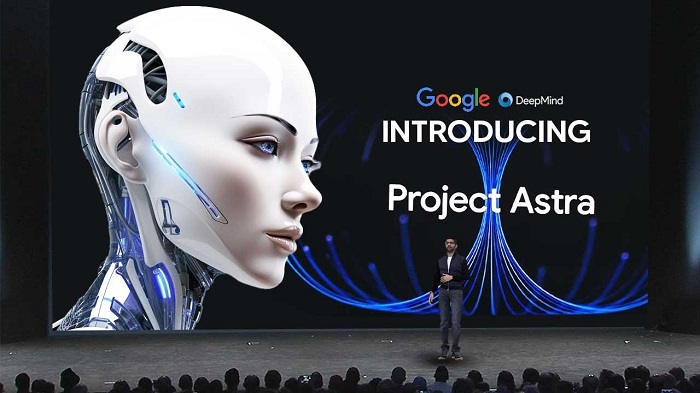
Project Astra: The AI Assistant That Sees the World
One of the most futuristic developments from Google is Project Astra.
Project Astra is Google DeepMind’s vision for a universal AI assistant capable of understanding the world in real time through video, audio, memory, and contextual awareness.
Using a smartphone camera or wearable device, users can interact naturally with AI while moving through the physical world.
Examples include:
Identifying objects instantly
Translating signs in real time
Answering questions about surroundings
Remembering where items were placed
Assisting visually impaired users
Providing contextual information during travel
Google has already integrated Astra capabilities into Gemini Live and AI-powered Search experiences.
This is one of the clearest signs that Google wants AI to move beyond screens entirely.
Google AI Glasses and Android XR
After the failure of the original Google Glass project years ago, many believed Google had abandoned smart eyewear. But AI changed everything.
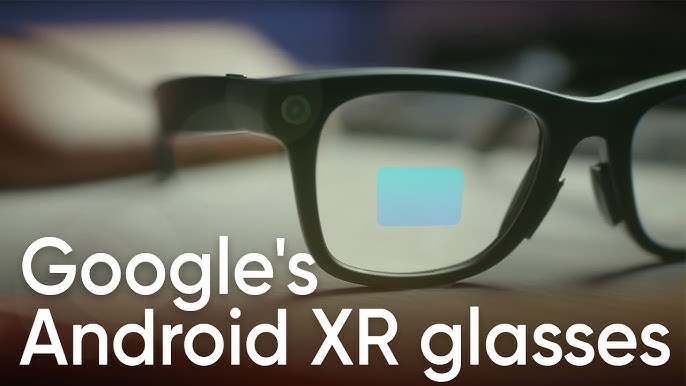
Google is now returning to wearable technology through Android XR — a new AI-focused mixed reality platform developed alongside partners like Samsung and Qualcomm.
The new AI glasses are fundamentally different from earlier attempts because modern AI systems can now understand context, language, visuals, and user intent simultaneously.
The upcoming glasses feature:
Real-time translation
Navigation overlays
Voice-based Gemini assistance
Camera-powered contextual AI
Hands-free interaction
Smart notifications
Live search capabilities
Google demonstrated how Gemini could see the world through the glasses and provide instant assistance naturally.
This represents the beginning of ambient computing — where AI becomes part of everyday life instead of existing inside apps.
The smartphone may eventually become secondary.
Gemini for Science: AI Beyond Consumer Products
While flashy consumer products attract headlines, one of Google’s most important AI initiatives is happening in science and research.
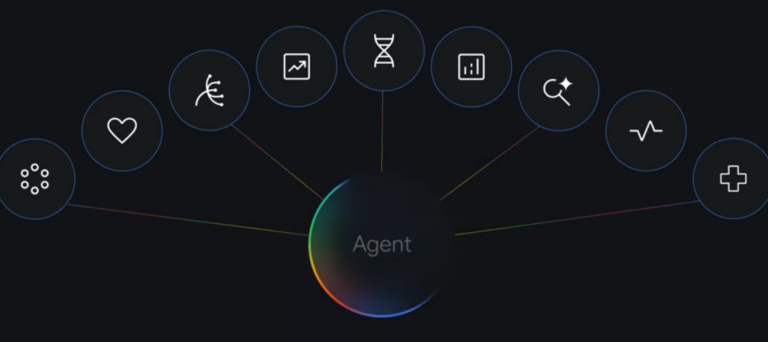
Google is increasingly using Gemini systems to accelerate scientific discovery, healthcare research, climate modeling, and advanced problem-solving.
AI systems can now:
Analyze massive datasets
Predict protein structures
Assist in medical research
Model climate systems
Speed up drug discovery
Generate scientific simulations
Gemini’s multimodal reasoning allows researchers to process scientific papers, charts, formulas, visual diagrams, and experimental data together.
This changes how science progresses.
Instead of spending months manually analyzing information, researchers can collaborate with AI systems capable of synthesizing knowledge across disciplines.
Google’s long-term AI vision extends far beyond consumer chatbots. It aims to build AI systems that augment human intelligence itself.
Google I/O: The Event That Confirmed the Future
Google I/O 2025 and 2026 marked a turning point in the technology industry.
For years, AI announcements felt experimental. But recent I/O events showed something different: integration at scale.
Google executives repeatedly emphasized one idea: AI should become proactive, personalized, and agentic.
This means AI will not simply answer questions. It will:
Anticipate needs
Complete tasks
Organize information
Monitor updates
Automate workflows
Interact naturally across devices
Google is effectively building an AI operating system for modern life.
The Human Side of Google’s AI Revolution
Despite all the technological excitement, the human implications are enormous.
AI is changing how people learn, create, work, search, communicate, and make decisions. That transformation brings both opportunities and concerns.
On one hand, Google’s AI ecosystem could dramatically increase productivity and accessibility. AI assistants may help students learn faster, creators produce content more efficiently, and businesses automate repetitive tasks.
For people with disabilities, AI-powered visual and voice systems could become life-changing accessibility tools.
However, concerns remain around:
Privacy
Data ownership
AI misinformation
Deepfakes
Job disruption
Dependence on algorithms
Centralized control of information
Research already suggests that generative AI systems are reshaping how users discover online content and how websites receive traffic.
As Google rebuilds Search around AI-generated answers, publishers, marketers, and creators will need to adapt rapidly.
The internet itself is entering a new era.
What This Means for Businesses and Content Creators?
The rise of AI-powered Search and Gemini systems will force businesses to rethink digital strategies completely.
Traditional SEO is evolving into AI-first optimization.
Future success may depend on:
Authority and trustworthiness
Conversational content
Multimodal experiences
Structured information
Real expertise
Human-centered storytelling
AI systems increasingly summarize and synthesize information directly instead of sending users to websites.
That means brands must become recognizable entities, not just webpages.
Content creators will also need to focus on originality, expertise, emotional intelligence, and authentic human perspectives — areas where human creativity still matters deeply.
Ironically, as AI-generated content becomes widespread, genuinely human content may become more valuable than ever.
The Future of Google AI
Google’s vision is becoming increasingly clear.
The company is building an ecosystem where AI exists everywhere simultaneously:
In Search
On phones
In glasses
Across apps
Inside workplaces
Within creative tools
Throughout daily life
Gemini Flash brings speed. Gemini Omni brings creativity. Project Astra brings contextual intelligence. Android XR brings AI into the physical world.
Together, these technologies create something much larger than individual products.
They create an AI-native internet.
Final Thoughts
For years, the idea of intelligent AI assistants felt futuristic. But Google’s recent announcements suggest the future is no longer theoretical.
Google’s AI transformation is happening now.
The search engine is becoming conversational. AI assistants are becoming proactive. Smart glasses are returning with real utility. Scientific research is accelerating through machine intelligence. And Gemini is rapidly evolving into the central nervous system of Google’s ecosystem.
Whether this future becomes empowering or overwhelming will depend on how responsibly AI is developed and adopted.
But one thing is certain:
Google is no longer simply organizing the world’s information.
It is building the intelligence layer for the next generation of human interaction with technology.