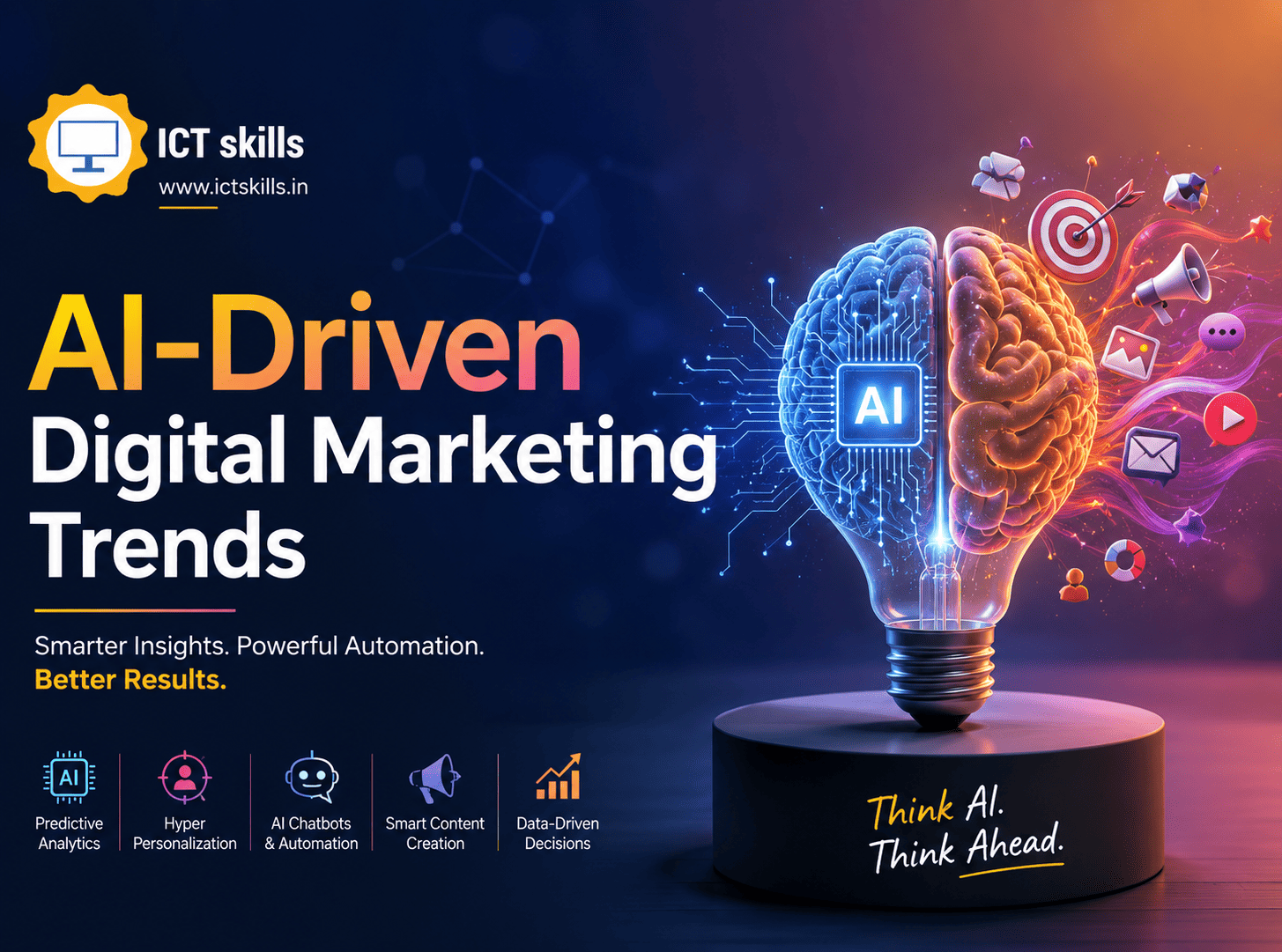
AI-Driven Digital Marketing Trends 2026: Future Marketing
Introduction
The digital marketing industry is experiencing one of the biggest transformations in its history. For more than a decade, marketers focused primarily on traditional SEO, social media growth, paid advertising, and content marketing. However, 2026 has introduced a completely new marketing landscape driven by Artificial Intelligence (AI), conversational search, automation, and evolving consumer behavior.
Search engines are no longer simply displaying links. AI-powered systems are now generating answers, recommending brands, summarizing content, and influencing buying decisions before users even visit a website. This shift is forcing businesses, marketers, agencies, and content creators to rethink their digital marketing strategies.
Whether you are a business owner, digital marketer, SEO professional, student, or entrepreneur, understanding these latest digital marketing trends is essential for staying competitive.
In this article, we will explore the most important digital marketing updates of 2026 and how businesses can adapt to thrive in the AI-driven future.
The Rise of AI-Powered Search
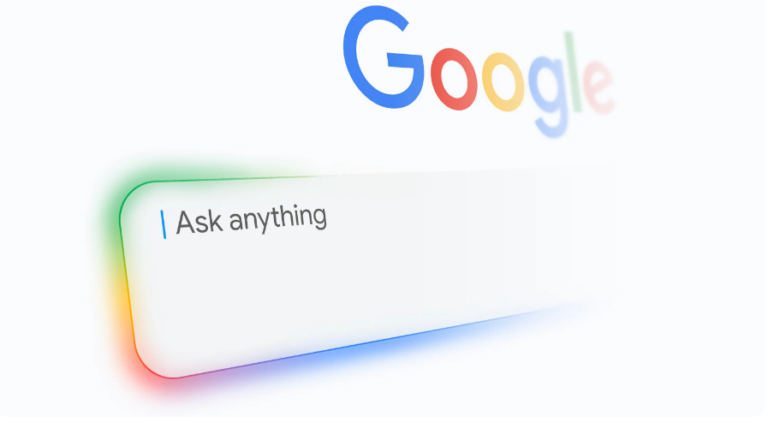
One of the most significant developments in 2026 is the rise of AI-powered search experiences.
Platforms like Google, ChatGPT, Gemini, Perplexity, and Microsoft Copilot are changing how users discover information online. Instead of browsing multiple websites, users increasingly receive direct answers generated by AI systems.
This shift has created what experts call:
- AI Search
- Answer Engines
- Conversational Search
- Generative Search Experiences
Users now ask longer and more specific questions, expecting personalized and context-aware responses.
For marketers, this means visibility is no longer limited to ranking on the first page of search results. Brands must now ensure their content is discoverable and trustworthy enough to be cited by AI systems.
Google AI Overviews Are Reshaping SEO
Google’s AI Overviews have become one of the most discussed topics in digital marketing.
Traditional SEO focused on ranking webpages. Today, AI-generated summaries often appear above organic search results, providing users with direct answers without requiring a click.
This has created a new challenge:
Many websites are experiencing fewer organic clicks despite maintaining strong rankings.
However, this also presents a new opportunity.
Brands that are cited within AI-generated answers gain greater visibility, credibility, and authority.
To succeed in this environment, marketers should focus on:
- Expert-driven content
- Accurate information
- Original research
- Structured data
- Clear content organization
- Strong brand authority
SEO is evolving from keyword optimization to trust optimization.
The Emergence of Generative Engine Optimization (GEO)

One of the fastest-growing concepts in 2026 is Generative Engine Optimization, commonly known as GEO.
Traditional SEO aims to improve rankings on search engine results pages.
GEO focuses on increasing the likelihood that AI systems will reference, quote, or recommend your content.
This new optimization strategy involves:
Creating Authority Content
AI models prioritize trustworthy information sources. Brands that consistently publish valuable content are more likely to be referenced.
Building Entity Recognition
Search engines increasingly understand entities rather than keywords.
Businesses must clearly establish:
- Brand identity
- Expertise
- Industry relevance
- Author authority
Strengthening Digital Trust Signals
AI systems evaluate:
- Website credibility
- Backlinks
- Brand mentions
- Reviews
- Social proof
- Industry recognition
The future of search belongs to brands that become trusted information sources.
Content Marketing Is Becoming More Human
Many marketers assumed AI would replace content creators.
Instead, 2026 has shown that human expertise is becoming even more valuable.
Search engines are actively rewarding content that demonstrates:
Experience
First-hand knowledge and real-world insights.
Expertise
Industry-specific knowledge backed by credentials.
Authority
Recognition from trusted sources.
Trustworthiness
Accurate and transparent information.
Generic AI-generated articles are becoming less effective because search algorithms increasingly prioritize authentic perspectives.
The winning formula combines:
Human expertise + AI assistance + original insights.
Video Marketing Continues to Dominate
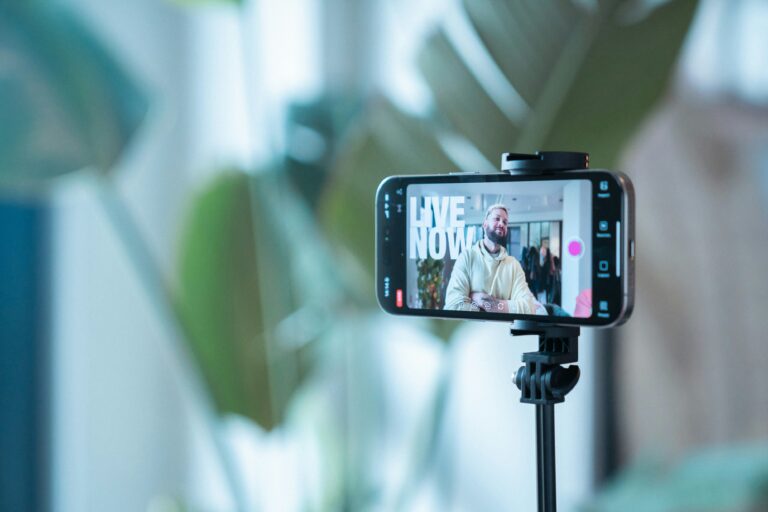
Video remains one of the most powerful forms of content marketing.
Consumer behavior shows increasing preference for:
- Short-form videos
- Educational videos
- Product demonstrations
- Tutorials
- Behind-the-scenes content
- Expert interviews
Platforms such as YouTube, Instagram Reels, LinkedIn Video, and TikTok continue driving significant engagement.
Businesses that incorporate video into their content strategies are often achieving:
- Higher engagement rates
- Better brand awareness
- Increased trust
- Improved conversion rates
In 2026, video is no longer optional, it is a core component of digital marketing success.
AI-Powered Advertising Is Revolutionizing Campaign Management
Artificial Intelligence is transforming paid advertising at an unprecedented pace.
Modern advertising platforms now use AI for:
- Audience targeting
- Budget allocation
- Creative generation
- Performance optimization
- Bid management
- Conversion prediction
Marketers can now launch campaigns faster while improving efficiency.
AI-generated creatives, automated ad testing, and predictive analytics are helping businesses maximize return on investment.
However, successful campaigns still require human oversight, strategic thinking, and brand understanding.
AI improves execution, but strategy remains a human responsibility.
Personalization Is Reaching a New Level
Consumers expect personalized experiences.
In 2026, businesses are leveraging AI to deliver:
- Personalized product recommendations
- Customized email campaigns
- Dynamic website content
- Tailored advertising experiences
Instead of broad audience segmentation, marketers are increasingly moving toward individual-level personalization.
This approach improves:
- Customer engagement
- User experience
- Conversion rates
- Customer loyalty
Brands that understand their audience deeply will maintain a competitive advantage.
Social Media Is Becoming a Discovery Engine
Social media platforms are evolving beyond communication channels.
Today, consumers discover products, services, and brands through:
- TikTok search
- Instagram recommendations
- LinkedIn content
- YouTube search
- Community discussions
Search behavior is becoming fragmented.
Users often search for information directly within social platforms rather than traditional search engines.
As a result, businesses must optimize content for multiple discovery channels.
Social media visibility now plays a critical role in overall digital marketing performance.
Brand Authority Is More Important Than Ever
One of the biggest digital marketing shifts in 2026 is the growing importance of brand authority.
Search engines and AI systems increasingly evaluate:
- Brand reputation
- Expertise
- Consistency
- Online presence
Businesses that invest in authority-building activities often gain better visibility across search, social media, and AI platforms.
Effective authority-building strategies include:
- Publishing expert content
- Earning media mentions
- Building quality backlinks
- Participating in industry discussions
- Creating thought leadership content
Strong brands are becoming easier for AI systems to trust and recommend.
Data Privacy and First-Party Data Strategies
Data privacy continues to reshape digital marketing.
With growing privacy regulations and changing tracking technologies, businesses must focus on collecting and managing first-party data responsibly.
Key first-party data sources include:
- Website registrations
- Email subscribers
- Customer databases
- Surveys
- Loyalty programs
Organizations that develop strong first-party data strategies will gain better customer insights while maintaining compliance.
Trust and transparency are becoming critical business assets.
Marketing Automation Is Becoming Smarter

Marketing automation has evolved beyond simple email sequences.
Modern AI-powered automation can:
- Nurture leads automatically
- Predict customer behavior
- Trigger personalized campaigns
- Optimize customer journeys
- Improve retention strategies
Automation enables businesses to scale marketing efforts while maintaining personalized customer experiences.
The goal is not replacing marketers but empowering them to focus on higher-value activities.
Skills Every Digital Marketer Needs in 2026
As digital marketing evolves, professionals must continuously upgrade their skills.
The most valuable skills include:
SEO and GEO
Understanding both traditional search optimization and AI visibility strategies.
Content Strategy
Creating authoritative, user-focused content.
AI Tools
Using AI responsibly for productivity and marketing enhancement.
Data Analytics
Interpreting data to make informed decisions.
Video Marketing
Producing engaging visual content.
Paid Advertising
Managing AI-enhanced advertising campaigns.
Brand Building
Developing long-term authority and trust.
Continuous learning is becoming essential for career growth in digital marketing.
How Businesses Can Prepare for the Future?
The future of digital marketing will belong to organizations that embrace change.
Businesses should:
- Invest in AI literacy.
- Focus on high-quality content.
- Build strong brand authority.
- Develop video marketing capabilities.
- Strengthen SEO and GEO strategies.
- Improve customer experience.
- Collect first-party data ethically.
- Adopt marketing automation intelligently.
Organizations that adapt early will gain significant competitive advantages.
Conclusion
Digital marketing in 2026 is being transformed by Artificial Intelligence, conversational search, automation, and changing consumer behavior. The era of relying solely on traditional SEO and keyword rankings is ending.
Success now depends on creating trustworthy content, building authority, optimizing for AI-driven discovery, and delivering personalized customer experiences.
The future belongs to brands that focus on expertise, credibility, innovation, and continuous learning.
For professionals looking to stay ahead of these industry changes, continuous upskilling and practical digital marketing education are essential. As AI continues reshaping the marketing landscape, the ability to combine human creativity with technological innovation will define the next generation of successful digital marketers.
This article is aligned with the kind of professional upskilling audience that follows ICT Skills India and incorporates current 2026 developments around AI search, GEO, Google AI Overviews, AI advertising, content authority, and evolving SEO practices.
Frequently Asked Questions (FAQs)
- What is AI-driven digital marketing in 2026?
AI-driven digital marketing uses artificial intelligence to automate, personalize, analyze, and optimize marketing campaigns across search engines, social media, email, content marketing, and advertising platforms. In 2026, AI helps businesses improve customer targeting, content creation, and conversion rates.
- How is AI changing SEO in 2026?
AI is transforming SEO through automated content generation, search intent analysis, predictive keyword research, AI-powered ranking algorithms, and personalized search experiences. Search engines increasingly prioritize helpful, authoritative, and user-focused content.
- What is Generative Engine Optimization (GEO)?
Generative Engine Optimization (GEO) is the practice of optimizing content to appear in AI-generated answers from platforms like ChatGPT, Google AI Overviews, Gemini, Perplexity, and Claude. GEO focuses on structured content, factual accuracy, citations, and question-based formatting.
- What is the difference between SEO and GEO?
SEO aims to improve rankings in traditional search engine results pages (SERPs), while GEO focuses on increasing visibility within AI-generated responses and conversational search results. Businesses should combine both strategies for maximum online visibility.
- How do Google AI Overviews impact SEO?
Google AI Overviews provide AI-generated summaries directly in search results. This reduces some traditional clicks but creates new opportunities for brands whose content is cited within AI-generated answers.
- Will SEO still be relevant in 2026?
Yes. SEO remains essential in 2026, but it is evolving. Success now requires combining technical SEO, content quality, user experience, E-E-A-T signals, and AI search optimization strategies.
- What are the most important Google ranking factors in 2026?
Key ranking factors include content quality, user intent satisfaction, website experience, page speed, topical authority, backlinks, E-E-A-T (Experience, Expertise, Authoritativeness, Trustworthiness), and structured data implementation.
- How can businesses optimize content for AI search engines?
Businesses can optimize for AI search by creating authoritative content, using clear headings, answering specific questions, implementing schema markup, citing trustworthy sources, and maintaining factual accuracy.
- What is Answer Engine Optimization (AEO)?
Answer Engine Optimization (AEO) is the process of structuring content so it can be directly used by search engines and AI assistants when answering user questions. AEO focuses on concise, clear, and authoritative answers.
- What role does AI play in content marketing?
AI helps marketers generate content ideas, automate content creation, optimize headlines, personalize messaging, analyze audience behavior, and improve content performance through predictive insights.
- How can marketers rank in Google AI Overviews?
To rank in AI Overviews, marketers should publish authoritative content, answer user questions clearly, build topical expertise, use structured data, and maintain high content accuracy and trustworthiness.
- What are AI search engines?
AI search engines use large language models and machine learning to generate direct answers rather than simply displaying web page links. Examples include ChatGPT Search, Gemini, Perplexity, and Google AI Search experiences.
- How does conversational search affect digital marketing?
Conversational search encourages marketers to create natural language content that directly answers user questions. Long-tail keywords and intent-based content are becoming increasingly important.
- What is predictive marketing with AI?
Predictive marketing uses AI and historical data to forecast customer behavior, identify trends, optimize campaigns, and improve marketing ROI through data-driven decision-making.
- How does AI improve customer personalization?
AI analyzes customer behavior, preferences, purchase history, and engagement patterns to deliver highly personalized content, recommendations, and marketing messages.
- What are the top AI digital marketing trends for 2026?
Key trends include:
- AI Search Optimization (GEO)
- Google AI Overviews
- Hyper-personalization
- AI-generated content
- Predictive analytics
- Conversational marketing
- Voice search optimization
- Autonomous marketing agents
- How important is voice search optimization in 2026?
Voice search remains important as users increasingly interact with smart devices and AI assistants. Content should be optimized for conversational queries and natural language questions.
- What is E-E-A-T and why does it matter?
E-E-A-T stands for Experience, Expertise, Authoritativeness, and Trustworthiness. Google uses these signals to evaluate content quality and determine whether content deserves visibility in search results.
- How can AI improve marketing ROI?
AI improves ROI by automating repetitive tasks, improving audience targeting, optimizing ad spend, predicting customer behavior, and increasing conversion rates through personalized experiences.
- Will AI replace digital marketers?
AI is unlikely to replace digital marketers entirely. Instead, it will automate routine tasks and enable marketers to focus more on strategy, creativity, customer relationships, and business growth.
- How do AI algorithms evaluate content quality?
AI algorithms assess content based on relevance, accuracy, authority, user engagement, expertise signals, content structure, freshness, and overall usefulness to users.
- What is zero-click search in 2026?
Zero-click search occurs when users receive answers directly on the search results page or through AI-generated responses without visiting a website. Optimizing for featured answers and AI citations is increasingly important.
- How can businesses prepare for the future of search?
Businesses should invest in SEO, GEO, structured data, topical authority, AI-ready content, user experience improvements, and trusted brand-building strategies.
- What is the future of digital marketing beyond 2026?
The future of digital marketing will be driven by AI-powered personalization, autonomous agents, multimodal search, predictive analytics, conversational commerce, and increasingly intelligent customer experiences.
- What is AI Search Optimization (ASO)?
AI Search Optimization (ASO) is the practice of optimizing content to increase visibility in AI-powered search results, including AI Overviews, ChatGPT responses, Gemini answers, and other generative search platforms.
Tag:AI Marketing, AI Search, AI Tools, Content Marketing, Digital Marketing, Digital Marketing Trends, Digital Skills, Future of Marketing, GEO, Google AI Overviews, Google Updates, ICT Skills, ICT Skills India, Marketing Automation, Marketing Strategy, Marketing Training, Online Marketing, PPC Advertising, Search Engine Optimization, SEO, Social Media Marketing

You may also like